

IT Strategy as a key driver in business success
The world in which businesses operate is shrinking daily. Customers are increasingly more tech-savvy and the instant gratification generation, intellectually fed by online and social media, demands change and innovation be delivered now. The upsurge in cloud solutions and distributed workforces all combine to make the importance of IT strategy progressively more important to many organisations. But “How”, you may ask, “can an IT strategy enable a competitive advantage for your organisation?”
Simply put, unless your IT strategy is focused on understanding and aligning to your business, customers and strategy, and delivering benefits against that business strategy, you will become less and less able to compete. While this sounds simple, the reality of defining an effective IT strategy is more complex.
Where to start – bring your Vision, Drivers, IT Strategy and Operating Model together
While the process may be complex, the start is simple: it begins with understanding your business’s strategic drivers and what they mean to the IT organisation. Only once you understand the long-term vision and drivers for the business can you begin the process of developing an IT strategy and operating model. With an understanding of IT’s current positioning in relation to the overall strategic drivers of your business, you can start to identify the gaps, opportunities for improvement, and risks and issues that exist with respect to IT’s positioning and alignment. Based on the outcomes of this process, you should be able to define your future state vision for IT – a good metaphor for this process is to ask your stakeholders to talk to “what ‘good’ looks like” for IT in five years’ time. One of the key lessons learnt in IT strategy development space is that IT doesn’t often think as fully about their customers as they should during this step. Spend some time identifying the different types of customers that IT services. These customers are, given the inevitable march towards transparency-by-technology[1], going to include organisational functions, end-users and the customers of the organisation. With the vision and future state defined, identify and document the strategic themes and priorities that will deliver the future state. The themes will often align to important strategic themes for the business as a whole, and the priorities will tend to align to key IT programmes and initiatives – the point is to show, on one page, what IT’s key focus areas are, and how they align to organisational priorities. With that in mind we’ve learnt that it’s difficult to focus on more than four or five themes and 15 to 20 priorities.
So where does the IT operating model fit in? As organisations become increasingly dependent on their IT function and digital capabilities for securing new customers and increasing value delivery to existing ones, we’ve seen that there is increasing focus on reducing cost-to-serve and moving to more accessible, less costly digital channels[2]. As this dependency increases, the need for a clearly defined IT operating model becomes more critical. As the focus of the operating model is to support the execution of the integrated strategy, it is vital that you understand the options, risks and unknowns associated with your IT strategy when you develop an operating model. The focal lens of the operating model may well be functions, capabilities (we recommend these over functions as there is less politicisation of capabilities), or processes, although we avoid prescribing this as IT organisations will have different foci at different times and the point is to illustrate the operating model in the most meaningful way. Finally, we don’t believe that an operating model can be complete without defined measures of success and metrics.
We have learnt that the definition of an aligned and integrated IT strategy often requires an outside view. All too often, business owners and IT managers are too involved in the micro environments of their roles to fully grasp the complexities and intricacies associated with a forward thinking IT strategy and operating model. In order to develop an effective strategy, operating model and, in some cases, the organisational structures required to support them, a bird’s eye view of the business and the IT function is critical. From this holistic view point, BSG IT Strategy consultants are able to help in articulating an IT strategy that will guide you in mapping how your IT assets can be used to drive business initiatives and add value to your organisation and, by association, your customers.
Who should be involved?
When developing an integrated IT strategy, there are a number of factors to be considered, and key to this is understanding whose input is critical in developing the process and meaningful outcomes. Bearing in mind that the primary customer of any IT function is the business it serves, it is imperative that the needs of the business be considered when drafting the strategy. By engaging with your business stakeholders throughout the development of the strategy, and by asking them to represent the customers of the organisation, you are able to ensure that the primary needs of your core users are met. In the past, IT strategies were often drafted in isolation, with limited consultation, resulting in IT strategies that were often very operationally focused and not aligned to the needs of the business. Through a process of continuous engagement and feedback into the strategy, IT is able to ensure alignment of its strategy to the overall strategy of the business.
Another benefit of involving business stakeholders is reducing the risk of ‘shadow IT’. A truly collaborative IT organisation should work with business functions so that they are both investing in the right technology where there is a need for new capabilities, and leveraging existing technology in the most effective way, ensuring that it delivers maximum value to the business. Throughout this process, IT should look to provide governance support, focused on bringing new capabilities into the IT organisation.
The BSG Difference
BSG recently led an engagement at a South African credit provider where loan origination accounted for 80% of its business. In client environments such as this, it is critical that structures are in place to support the optimal operation of this business function. Having grown substantially in the 19 years since its inception, the organisation has written more than 1 million personal loans and serviced over 385 000 car and home, and over 165 000 life insurance customers to date. As its marketing requirements became more interactive and customer-led, the decision was made to replace the current core loans software platform, largely due to the increased need for flexibility and extensibility. This core system upgrade would need to be carried out so that IT could better support the organisation’s operational strategies.
In order to support the platform upgrade, the team collaboratively developed a Target Operating Model (TOM), and supporting capability perspectives and organisation structures, along with business case frameworks to represent the future state of the IT function and a roadmap to guide the transitional journey required to achieve the future state. Working within tight timelines, the project team was able to create a TOM that ensured the client’s IT function would better address the strategic requirements of the business. This approach ensured the client had a clear view of how its IT function would operate post-transformation.
BSG’s IT strategy and operating model development experience spans diverse industry sectors, from financial services to oil and gas. Recently, a BSG project team was instrumental in the delivery of a TOM for a leading global oil and gas company’s Southern African IT function. This organisation had recently appointed a new capability manager to head up the IT function who required support to better understand the South African business environment and the role of the IT function in supporting the business strategy being pursued in the region. As an organisation that has clients operating across numerous geographical regions, BSG is uniquely positioned to provide guidance and context in situations like these. An immediate outcome of this process was the recognition that the IT function was unprepared to respond to the business demands, which resulted in a process to develop a more holistic understanding of the business and customer requirements and strategy, and a supporting IT strategy and TOM.
In order to develop the TOM, the BSG project team developed a cross section view of the business and capability landscapes, incorporating the business strategy, goals, organisation structures, risks and key discrepancies between the business and the capability’s strategies. This cross-sectional view was made possible through the use of a custom-developed customer-centricity survey tool, which was used to measure the business partners’ perception of the IT function and obtain feedback on progress towards goals. With this information the team defined a new operating model, communications and reporting approach and an IT response to the business strategy, which articulated and detailed how the IT function intended to support the business strategy over the coming years. Once these were agreed, an IT strategy and supporting strategic plans were developed. This work was so well received at a local level that the thinking behind it has since been carried through at a global level and across multiple functions within the client’s global operations.
What sets BSG apart?
BSG’s tradition of applying practices traditionally associated with entrepreneurial and start-up environments to consulting in established businesses proves to be a differentiator in many cases. With regards to IT strategy and operating model development, BSG applies practices such as User Experience Design (UXD) and principles of the Lean Start-up movement and Running Lean to set itself apart from other consulting and technology companies.
In developing IT strategy, as mentioned, it is critical to consider the needs of the business – your IT function’s primary customers. In order to do this effectively, BSG project teams adopt UX practices ensuring that they are able to engage the business on a very customer-centric level. This approach ensures the team has a holistic view of where IT is in terms of delivering value to the business, where it should be and how to get it there.
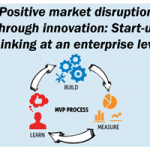
By following a build-measure-learn approach in the delivery of its operating models, BSG IT Strategy and Advisory project teams are able to build a base operating model very quickly, which can then be iterated upon. This approach allows project teams to refine the model based on practical applications and input from critical business stakeholders. Project teams follow a dual-pronged approach: applying a qualitative approach with business stakeholders and a more model-based approach with IT stakeholders. Both facets of the operating model are then combined in the final version. These approaches ensure that BSG’s project teams are able to adopt an agile, collaborative approach that takes a wider view of the requirements. This innovative thinking ensures delivery of strategies and supporting operating systems that work in practice, and deliver tangible value to the business from implementation. From whiteboard to benefit, BSG delivers.
[1] The idea that IT is becoming more and more involved in interactions with customers than before, thanks to a focus on digital marketing and technologies
[2] In line with this, while there is continued pressure on cost-efficiency for IT, there must be a corresponding recognition of the need to invest in additional IT capabilities, driven by an accessible, meaningful IT strategy
To download a printable version of this article, click here.