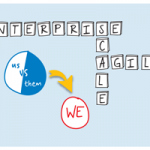


Do you have core system agility on your mind?
 Core system replacement might be the toughest implementation you will encounter in the IT projects landscape. With customer-centricity coming to the fore, it is inevitable that organisations with core systems implemented between the late ‘70s and early ‘90s will need to consider how their current platforms enable their digitisation strategies. History is littered with horror stories and success stories of core systems replacements, and it’s difficult to predict outcomes of any undertaking. There are common characteristics amongst the winners of the core replacement battle, such as centralised customer data stores, limited application silos, rationalised product portfolios and standardised account processing. These characteristics go some way in reducing the complexity of “changing the plane’s engine mid-flight”. Once an organisation understands the characteristics that make it unique, and more importantly, understands the drivers for change, it can begin to look at options to enable organisational agility through its core systems. Here are 3 of my preferred strategies for implementing core system agility:
1. Core system replacement
A few organisations have gone down this path (CBA, Nationwide, SBSA, NAB, BBVA Compass) with trends suggesting more will follow. In the event that you have burning platform issues, extremely high maintenance costs, a dwindling subject matter expert (SME) base and a complete core system replacement is your only option, then you need to take heed of the following:
- Expected payback period – in some cases core system replacements took 8-10 years
- Vendor experience – review capacity, track record and project/programme management skills
- Regulator engagement – keeping stakeholders informed of customer impacts
- IT transformation vs. Business transformation – be clear on which one you are doing as a way of managing scope creep and expectations
- Business and Technical proof of concepts are essential – prove the idea in a low complexity setting, and consider platform sizing and testing
2. Core system componentisation
It is possible to turn certain sectors of the existing core system into components that can be re-used – progressive renovation as it were. This allows for a more controlled approach to transformation/replacement. It also gives IT a greater chance at success, by reducing the number of moving parts in complex programmes typically included in core system transformations. This could be an option for the more risk averse organisation, or one where the budget and sponsor commitment into the medium and long term horizon is not a certainty.
3. Integration layer re-vamp
Admittedly, this option doesn’t make your core system more agile, it just makes your interaction with the core application ecosystem more agile. However, in the context of enabling digitisation and organisational change, it becomes a good option if you are faced with a complex legacy application landscape, siloed applications and a heavily fragmented customer segment map. Such a reality would require your core system to be all things to everyone. By focusing effort on the integration layer you can enable the Front-office agenda without legacy system replacement. This can be achieved through adopting Banking Industry Architecture Network (BIAN) standards, for example.
Any of these options will be viable in the appropriate context. There’s no “right” way to do it, although there are plenty of wrong ways. It is the prerogative, and indeed the duty, of the CIO to gather the right information in order to make an informed decision.
To download a printable version of this article, click here.