

Innovation Through Positive Market Disruption: Start-up Thinking at Enterprise Level
In an ever-changing business market characterised by globalisation, China as a manufacturer and consumer, the Internet and the decreasing power of brands, established companies are increasingly feeling pressure to innovate as start-ups do. Although it is widely recognised that start-ups are not smaller versions of companies, it has only recently been understood that companies are not simply larger versions of start-ups. An established company operates under the guidance of strict policies and procedures, processes put into place to ensure maximum efficiency and minimum waste. It follows a proven business model that directs and guides it to ensure on-going profitability. Its business models define its products and/or services, the customers they’re meant for, the channels they’re delivered through and how demand is created. All geared to ensure the continued success of the company. All unintentionally contributing to its lack of agility when it comes to innovation.
Where start-ups see opportunity, companies often see risks or threats. In order to keep up with the slew of start-ups entering the market each year, many businesses have established corporate innovation divisions. This has seen many organisations adopting the practices of start-ups and accelerators in order to increase their innovation efficiencies. Although the corporate innovation division is an in-house function, many companies lack the necessary implementation expertise, leading them to seek the guidance of external consulting and technology companies, like BSG, to assist in applying start-up thinking at enterprise level.
In two such cases, BSG has been instrumental in providing recommendations and a roadmap to successful implementation of innovation using start-up principles such as Customer Development, Rapid Prototyping, Customer Experience Design (CXD) and Running Lean principles. At one of South Africa’s Big Four banks, BSG was approached to provide CXD and Business Analysis (BA) capabilities to direct the design process of an innovative new mobile app. The inventory management app would allow customers to catalogue and categorise their belongings, store digital versions of warranty documents and get more accurate household insurance quotes and premiums.
Throughout the project, the team operated under extremely tight timelines. In order to meet client expectations and develop a Minimum Viable Product (MVP) that would adequately address the needs of the customer, the BSG project team applied Lean and Agile delivery methods as well as CXD expertise.
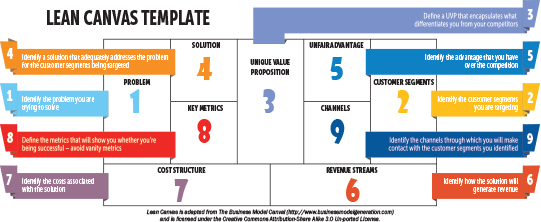
The first process the team underwent was to determine whether the app was a viable venture and, if so, which features customers believed it should have. In order to determine this, the team created a ‘Lean Canvas’ that defined the problem that this solution would address, and the clients that the organisation expected would want to solve this problem. The team then conducted customer interviews, surveys and observations in order to establish whether these customers did in fact believe that this was a problem worth solving. The project team conducted interviews and surveys both in the client environment and out of the building, speaking to customers in a neutral environment, asking them to rank statements as “Must Solve”, “Nice to Solve” and “Don’t need to Solve”. This initial phase of investigation – the Problem-Solution Fit – allowed the team to assess the necessity of the app from a customer perspective by combining CXD and Running Lean approaches.
Based on these outcomes, the team was able to determine which aspects of the problem most needed to be addressed, and therefore to plan the features to be included in MVP 1 to address these highest priority problems. The next phase – the Problem-Solution Fit – allowed the team to assess the suitability of the MVP 1 in terms of whether the solution features adequately addressed the problem, and thereafter whether the target market would be willing to pay for the app – the Product-Market fit. During this phase of investigations, the team conducted further customer interviews and observations, and developed User Profiles and Personas, which would be used during the development phase of the project. Once again, these investigations were done within and outside of the client environment. Customers were shown screenshots of the prototype app and were asked whether they believed the app solved the problems identified during the Problem-Solution Fit phase of the project.
This build-measure-learn approach was conducted using low and high fidelity wireframes, and participatory design. This also assisted in the development of the information architecture required to organise the back-end navigation of the app. The prototype that was developed in the first stage of the project evolved into a fully functioning, clickable prototype. By following a rapid prototyping approach the project team was able to clearly illustrate look and feel and functionality requirements to the developers and ensure business requirement alignment.
It is critical, especially when applying approaches traditionally linked to start-ups, that the expectations and change are managed with client stakeholders. Many organisations will experience significant difficulty adopting Lean, iterative approaches and may, consciously or unconsciously, try to revert to a more familiar waterfall approach. In order to mitigate this, it is critical that senior leadership within the client environment is aligned to the decision to implement Lean and Agile approaches, and is seen to drive the change through constantly reminding the team of the reasons for moving to a more effective methodology, and to role model using the new methods. Additionally, some teams within the client environment may need constant reinforcement as to the benefits of the approaches.
There is immense benefit that can be derived from early involvement with actual or potential customers and users when developing innovations, both for start-ups and at enterprise level. This is known as the ‘fail fast’ approach, and embraces iterative principles to build enough to test and get feedback you can trust, that then allows you to persevere (i.e. continue to the next experiment) or pivot (i.e. use what you have learned to adjust the MVP). Their involvement can significantly reduce R&D costs associated with developing new products and product innovations. By determining early whether there is actually a need to be filled can save organisations millions in R&D costs. Similarly, through the processes of creating wireframes and rapid prototyping, customers are engaged on questions of look and feel and functionality early on, saving time and money when it comes to development.
 The combination of Lean and Agile practices with CXD or User Experience Design (UXD) is so natural that it is hard to imagine conducting one without the other. By combining these practices, BSG project teams have had great success in various areas of the financial services industry. The entry-level operations of a leading South African diversified insurer had previously developed a mobile app to assist its sales agents to operate optimally. However, during the app’s pilot deployment phase, the application was not well received as it did not satisfy the user needs in the correct manner, and the pilot group did not adopt application to supplement their sales activities as a result. BSG was contracted to assist with the implementation of UXD practices to better understand the user requirements for the app.
The BSG project team employed a number of UXD and Running Lean techniques, namely creating…agents, to gather insights and make recommendations. With the information gathered from these investigations, the project team created a set of User Journey Maps detailing the as-is journey as well as the proposed optimised to-be journey. Additionally, the project team reviewed the pilot app developed by the Insurer from a technical standpoint, and developed a set of recommendations and low fidelity wireframes based on the technical review and the user data. The project team developed a feature list to be implemented on the mobile application that would be developed using Agile Development practices. Although BSG was not contracted to assist with the app’s development, the project team delivered a comprehensive roadmap, based on the application of UXD and Running Lean principles, which if implemented, will assist in ensuring the sales force is better equipped and more efficient.
By implementing practices such as Design Thinking (which relies heavily on which relies on an organisation’s ability to iterate and pivot its MVP on an on going basis while constantly seeking customer feedback and engagement), and Customer Development (which relies on CXD principles), companies are able to begin to innovate as start-ups do. The more enterprises are able to incorporate these practices into all phases of the innovation process, the more successful they are likely to be. If innovation is powered by understanding and observation of what customers need and like, then successful innovation is powered by implementation of CXD, Lean and Agile practices.
At BSG, we are able to guide our clients in implementing innovations on a substantially reduced time scale, ensuring early and continuous delivery of collaboratively developed innovations that are tested and validated with customers on an ongoing basis. By applying start-up thinking at enterprise level, we are able to help our clients to invest in better ideas by ensuring that identified opportunities confidently answer certain key questions. By following this approach, BSG consultants are able to more clearly define the requirements and scope of an opportunity as well as to determine if there is sufficient market desire to make the opportunity worth pursuing, saving time and money further down the innovation pipeline.
With almost two decades of industry experience, BSG is the perfect partner to help businesses investigate, develop and capitalise on innovations. We have been an integral partner in the delivery of over 500 projects to businesses across a wide variety of industries including, retail and investment banking, insurance, mobile money, telecommunications, and oil and gas. At BSG we have a proven track record of guiding our clients to success by developing authentic relationships based on tested results and trust. BSG has delivered successful interventions across a variety of environments and levels of complexity despite various challenges.
At BSG we have the knowledge and experience to help you successfully innovate like a start-up, from whiteboard to benefit.
To download a printable version of this story, click here.